Booklist
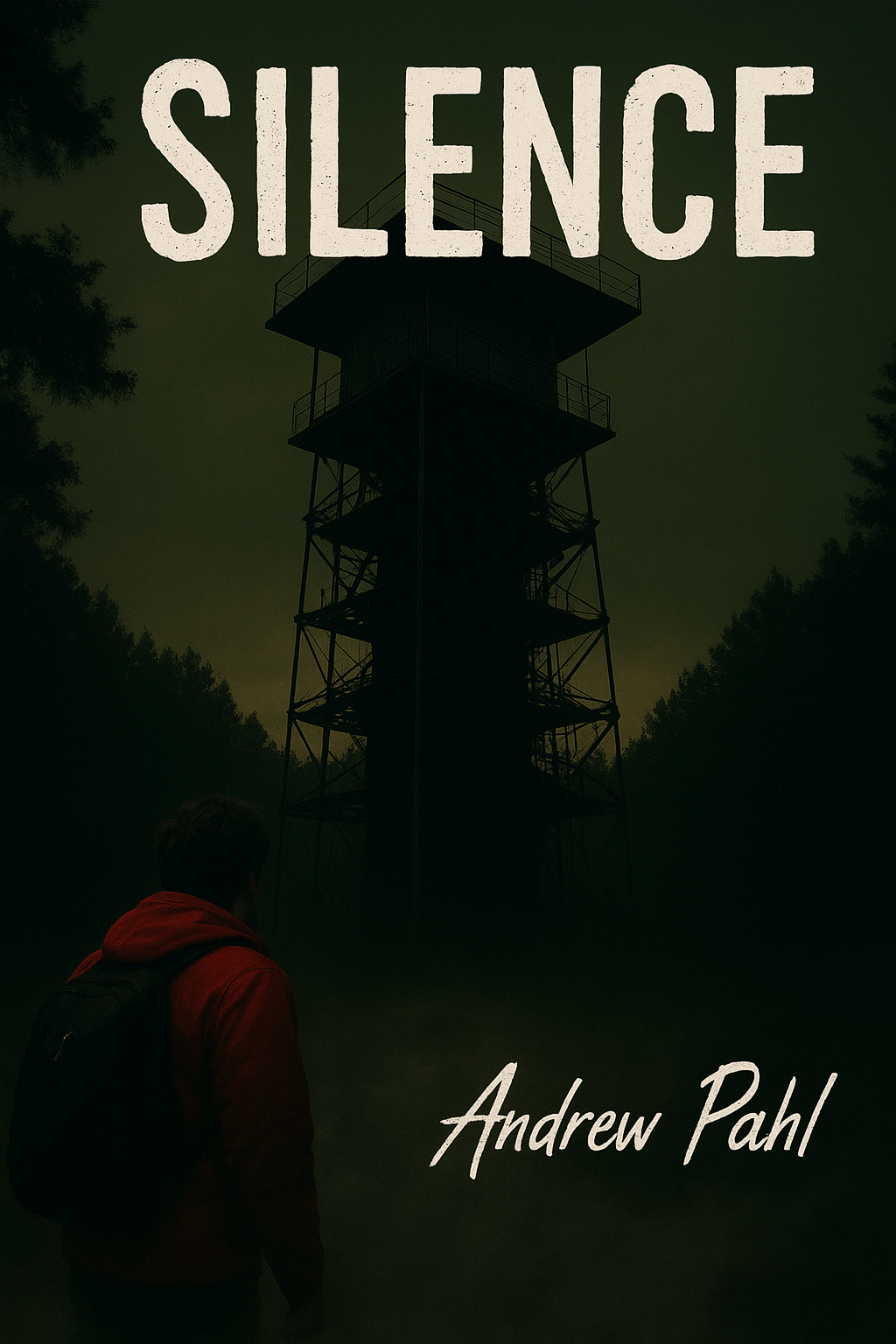
Silence cover
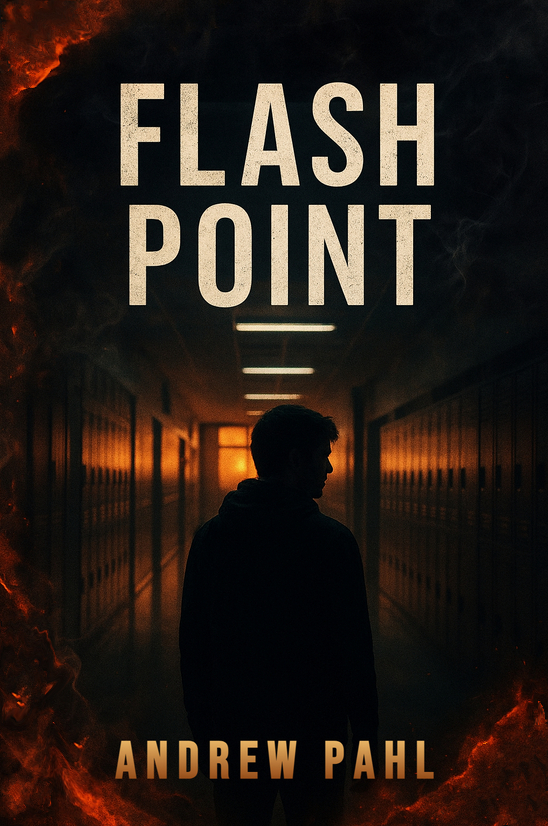
Flash Point cover
SILENCE: A Horror/Thriller Novel
Silence cover
For decades, Glenwood National Park has promised refuge from the rush of modern life. With thousands of miles of forest teeming with wildlife, millions revere its breathtaking beauty each year.

But when the chilling death of a hiker shocks the locals, the only witness is a lone park ranger—one nobody believes when he recounts what happened that night. Even his fellow rangers remain skeptical. Yet as time passes, they begin to realize the truth may be far worse—and on the hunt.

When the police dismiss his report and an eerie silence falls over the once-serene park, the ranger and his colleagues must confront a horrifying reality: raccoons and bears aren’t the only creatures that roam Glenwood’s forests.
Characters
Don knows Will Stoll better than anyone. He’s more than a park ranger—he’s his closest friend. When Will reports seeing something inexplicable after a brutal hiker attack, Don struggles to believe him. But as strange encounters mount across the park, he must confront the impossible—and help will show the world that raccoons and bears aren’t the only things that roam Glenwood’s forests.

Arthur longs for a normal life, but circumstances beyond his control have always kept it out of reach. Looking for comfort in the company of his older brother, he joins a group trip to Glenwood National Park. But instead of the escape he hopes for, Arthur quickly finds himself trapped in an ordeal that will test his courage, trust, and will to survive.

Two people. One nightmare.
Silence detail image 1
Silence detail image 2
Inspiration
To be honest, Silence started as a throwaway thought I had in a high school science class. I took AP Biology in my freshman year and recall learning about cells—particularly genetics—as I began wondering just how vulnerable they were to errors. I went home that day and typed a few prompts into Google while I was eating dinner. One thing led to another, and before I knew it I was at my computer looking into college-level genetics.

I quickly learned that we, as humans, are very delicate creatures. What’s more, we share many of our genetic weaknesses with animals. This left me with even more questions. Just how malleable are genes? What parts of our genes can be altered? How far can we push them before something breaks?

I found that last question particularly unsettling. So, since I’m an avid enjoyer of anything in the horror and thriller realms, I set out to blend some of nature’s most beautiful settings with terror, eeriness, and, of course, science.

If there’s one thing I learned, apart from the biological concepts that fueled my writing, it was that “nothing” can sometimes mean “everything.” What I mean is that if you deprive someone of all concrete information and leave everything to their imagination, they would produce a far scarier reality than anyone informed ever could. This paved the way for my final realization: we as humans can be more terrifying than anything that could possibly be written on a page. Hence, the name Silence.”
Context
For every 1 million visitors every year, roughly 200-300 people die in national parks across the United States. More than half of these deaths are accidents—drowning, falling, etc. Although rarely documented, some cases are marked by the National Park Service as having “Undetermined” causes; this is usually because investigators cannot access the terrain, or weather patterns and scavengers tamper with evidence.

No matter the causes, this lack of information opens the door to speculation, and the topic has received coverage ranging from online personalities and discussion threads to countless news stations and reporters. For most of these cases, the mysteries will likely remain unsolved.

This is the unsettling gray area where the novel Silence begins.

Silence detail image 3
Flash Point - COMING SOON
Flash Point cover
Where most see and hear about success, happiness, and love, a boy silently grapples with a twisted and stabbing truth.

He senses what awaits him if he stays with his girlfriend. He knows how she is. He knows how her family is. But what would happen if he leaves? How would they react? Perhaps that scared him more than being with her—with them.

Andrew Pahl depicts a raw, intimate account of four years fraught with crisis and confusion—from the terrifying corridors of his youth to the stranglehold of adulthood—through combining short stories, poetry, artwork, quoted media, and film. From the persistent shadows of a toxic relationship and the chilling discovery of being stalked, to deep reflections on his roots and continual efforts to incinerate his former self, Flash Point serves as a testament to resilience. It explores the uneven path toward psychological recovery—through the moments we choose to remember and the ones we cannot forget.
Characters
Andy has yet to experience true terror. He’s watched dates come and go, and every so often got his hopes up, but nothing ever amounts to a relationship. So when a girl named Maya reciprocates his interest, he feels a blissful tinge of excitement; she might be the start of a new chapter in his life. Ultimately, he’s right—but for a far darker reason.

Maya is someone Andrew still knows little about. Where he finds trust and a safe space, she finds something more useful.

Andrew sees the world for what it really is. Fragmented by his past, he endeavors to pick up the pieces of the person he once knew himself to be—and figure out who he really is in this new reality.

“This is my first last testament.”
Flash Point detail image 1
Flash Point detail image 2
Inspiration
Flash Point is a glimpse into one of the most terrifying and real experiences of my life. That’s not to say these experiences happened exactly as they are shown in the book. Names have been changed, timelines have been altered, and people have (ironically) been protected by certain authorial choices I made. I keep the book separate from total nonfiction, but many of the story’s events actually happened.

Despite my defensive authorial posture toward everyone else in the book, I specifically gave as candid a retelling as I could regarding my personal reactions and identity during this time. I was confused. I was afraid. I was angry. I didn’t know who I could trust anymore—and even applied that thinking to my closest friends and family.

Writing this book was twofold: it was a way to document my emotions and the oddly remarkable story of my high school life, but it also helped me get my emotions out there while everything was still happening. In times when I struggled to find people I could trust, a piece of paper usually never let me down. I don’t think I would have managed myself as well as I did (which already wasn’t great) during that time without it.

In that way, Flash Point is a literary take on a lyrical documentary. If it tells the truth nowhere else, then it certainly nails the way I was feeling and processing the world. And bizarrely, the most human parts are the ones when I feared I had lost touch with my humanity.

Enjoy.”
Context
Youth mental health is a topic of increasing concern. Over 1/5th of teenagers deal with intense loneliness, which can oftentimes be attributed, among other causes, to the search for a personal identity, isolation in an era of growing technology usage, or—in some cases—a trauma response. The vast majority of high schoolers in the modern day report experiencing at least one traumatic event in their lifetime.

Kids who experience difficult, traumatic, and/or scary events can undergo a variety of cognitive and behavioral changes. Some may pull away from people close to them. Some may attend sessions with a therapist. Some may turn to darker thoughts.

Titles and labels aside, this is the setting that brewed the perfect storm for the events of Flash Point.
Flash Point detail image 3
© 2025 by Andrew Pahl